Monsoon, Morality, and Masterful Satire: Inside the Indian Student Uprising
An analysis of the decentralized student revolt, the coaching-industrial complex, and the Cockroach Janta Party counter-movement.
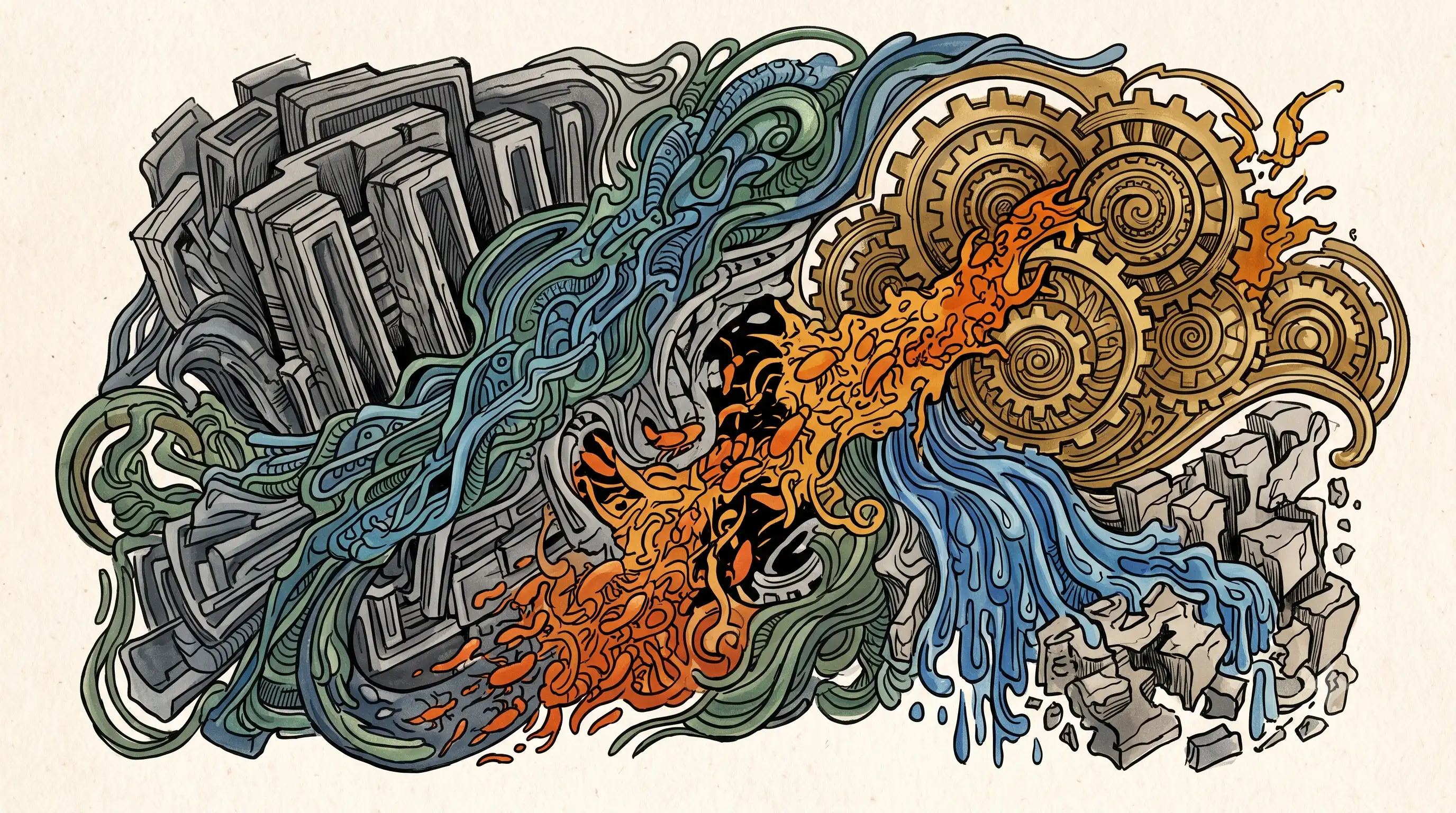
There is a striking, poetic friction unfolding under the heavy Delhi downpours right now. On one side of the barricades, you have the sleek, sterile architecture of institutional power, attempting to handle a systemic national crisis through dry press releases and bureaucratic damage control. On the other side, huddled under leaking blue tarpaulins at Jantar Mantar, are thousands of students sleeping on waterlogged asphalt, singing, studying by phone light, and holding the line. This isn't your grandfather’s political rally. This is a decentralized, crowd-fueled masterpiece of modern resistance. When a dismissive remark from the top labeled these desperate, protesting students as "cockroaches," the movement didn't retreat in shame. Instead, they took the insult, converted it into digital currency, and birthed the Cockroach Janta Party (CJP). It is a stark reminder that while empires and systems built on weak foundations crumble, it is the resilient, ignored masses who survive the fallout.
The Broken Engine and the Coaching-Industrial Complex
To understand why a leaked question paper can trigger a nationwide youth uprising, you have to look past the examination halls and into the sprawling, multi-billion-dollar machinery that feeds them. In India, competitive exams are no longer just an evaluation tool; they have been engineered into a high-stakes lottery where the cost of entry is absolute. Entire towns have been transformed into factory floors for human capital. From the high-pressure dorms of Kota to regional coaching hubs, millions of teenagers spend their formative years tracking progress on stopwatches, breaking down their days into rigid, micro-managed slots, and carrying the financial sacrifices of their middle-class parents like an anchor around their necks.
This is a hyper-optimized, high-concurrency engine, but it operates on a terrifyingly fragile premise: absolute trust in the integrity of the system. When an exam paper leaks, the algorithm of meritocracy breaks completely. It isn't a minor runtime error that you can simply patch with a makeup test or a delayed academic cycle. For the student who gave up their youth for a fair shot, a leak is a systemic theft. It means the inputs were rigged, the database was compromised, and the thousands of hours they invested have been rendered statistically worthless overnight. The profound tragedy isn't just that the system failed to secure its data it’s that when the glitch was exposed, the architects of the system expected the inputs to remain quiet.
The Anatomy of a Satirical Revolt
Traditional political machinery relies on rigid hierarchies, massive budgets, and predictable playbooks. The movement unfolding on the streets today relies on something far more potent: creative defiance and open-source coordination.
The defining turning point of this uprising didn't come from a political manifesto; it came from a moment of institutional arrogance. When the highest echelons of power dismissed the desperate, protesting youth as "cockroaches" inconsequential pests making noise in the margins, they expected the insult to crush the crowd's morale. Instead, the students did something brilliant. They adopted the label, weaponized the contrast, and built an entire counter-culture overnight. By launching the Cockroach Janta Party, the movement flipped the power dynamic. What was meant to be a derogatory slur became a badge of absolute, indestructible resilience. It is a masterstroke of modern satire using memes, internet subversion, and crowd-funded digital networks to fuel a very real, physical presence under the Delhi monsoons.
Unlike top-down organizations, this movement functions like a decentralized community. There is no single point of failure. When blockades are put up, the network adapts. When the rain pours, the tents are reinforced. By using creative irony to disarm structural authority, these students have shown that raw, organic empathy will always outpace a cold, defensive establishment. They aren't just demanding a clean exam; they are redesigning the very aesthetics of democratic dissent in India.
The Architecture of Dissent
A movement transitioning this rapidly from internet memes to waterlogged street blockades requires a strategic blend of digital design, raw narrative power, and deep moral authority. At Jantar Mantar, this architecture of dissent is driven by three key pillars: founder Abhijeet Dipke, a communications strategist who leveraged digital and AI platforms to scale the Cockroach Janta Party counter-culture; Saurav Das and Vijeta Dahiya, narrative operators who translate chaotic student frustration into clear legal demands and letters to political leaders; and Sonam Wangchuk, the Ladakh climate activist whose grueling multi-week indefinite fast lent immense moral weight, anchoring the protest for a public looking for an uncompromising conscience.
The Escalation The Flashpoint of July 2026
A week ago, this movement was defined by brilliant internet satire and peaceful encampments under the heavy Delhi downpours. Today, the digital counter-code has collided head-on with the raw enforcement power of the state. We have reached the ultimate stress test of the CJP network architecture. On Saturday, July 18, after 21 exhausting days of an indefinite fast, Sonam Wangchuk was forcibly removed from Jantar Mantar by the Delhi Police under heavy barricades. The establishment cited deteriorating health and judicial directives, but the move instantly backfired, supercharging the emotional density of the crowd.
In a classic display of decentralized resilience, the movement didn’t scatter when its most high-profile leader was taken. The moment Wangchuk was hospitalized, founder Abhijeet Dipke stepped onto the stage and launched his own indefinite hunger strike to hold the line. Even after facing a direct ink attack designed to cause panic on the ground, the message from the leadership remained unyielding: the network adapts, the protest stands. The entire trajectory of this conflict is now bottlenecked at a single date July 20, 2026. The CJP has called for a massive 'Sansad Chalo' (March to Parliament) to coincide perfectly with the opening day of the Monsoon Session. What started as a digital parody of structural arrogance has transformed into a literal, physical standoff at the gates of Indian democracy. The "cockroaches" are no longer just ranting online; they are marching on the capital.
The Synthesis Redesigning the Architecture of Trust
When we step back from the shifting barricades of Delhi, the legal battles, and the chaotic digital noise, a fundamental truth emerges: Nation-building cannot just be about the glossy, high-profile physical structures we build. It must be about the invisible infrastructure of a society trust, equity, and institutional accountability. What the Cockroach Janta Party has exposed isn't just a failure in exam security; it has exposed a profound flaw in how power communicates with its own future. When the youth of a country cry out because the rules of meritocracy have been bent out of shape, dismissing them as "inconsequential pests" isn't just an insult it's bad engineering. It is an attempt to ignore a massive systemic bug instead of fixing the core codebase.
But as this movement has proved, you cannot easily suppress a network that learns to crowdsource its resilience. By turning a structural slur into a badge of absolute, indestructible honor, these students have flipped the script. They have shown that a decentralized, creative, and profoundly peaceful community can stand toe-to-toe with a rigid, centralized establishment. I stand with this cause because the foundation is undeniably compromised. I stand with this movement because the alternative is accepting a future built on a systemic glitch. When the history of this turbulent era is written, it won't just remember the empires that struggled to maintain control; it will remember the "cockroaches" who survived the collapse, held the line in the pouring rain, and marched to remind the nation exactly who it belongs to.